Intelligent use of solar power requires a battery storage system.
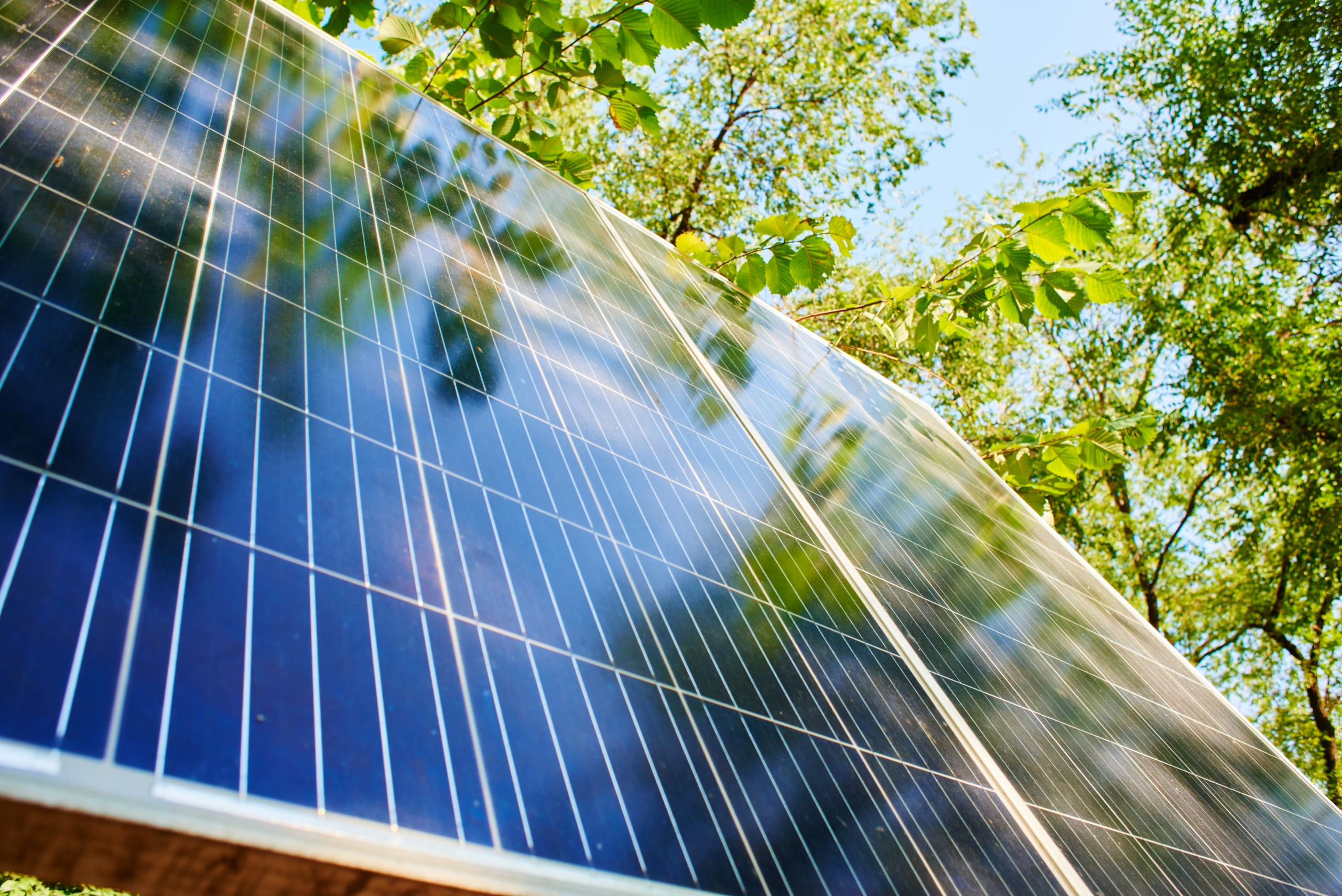
From January 1, 2026, the grid-serving feed-in regulation will apply in Switzerland:
New PV systems may feed a maximum of 70% of their installed capacity into the grid. Self-consumption and intermediate storage, however, remain unrestricted.
The background is understandable:
Midday PV peaks are increasingly leading to grid bottlenecks; grid expansion is expensive and slow. Peak loads must be reduced to utilize the existing grid more efficiently.
The consequence for plant operators is clear:
- Without optimization, production will be curtailed.
- Yield losses can be avoided with intelligent self-consumption.
- Battery storage systems are becoming the central enabler for shifting solar power over time, relieving grids, and ensuring economic viability.
This is not an isolated case, but a signal for the future system logic:
Feed-in alone is no longer sufficient.
Flexibility is becoming the new currency in the electricity system.
Conclusion:
Starting next year, it will not only be more sensible but necessary to consider storage and energy management from the outset for PV projects – in Switzerland and beyond.