Optimised electricity costs through battery storage in industry and commerce
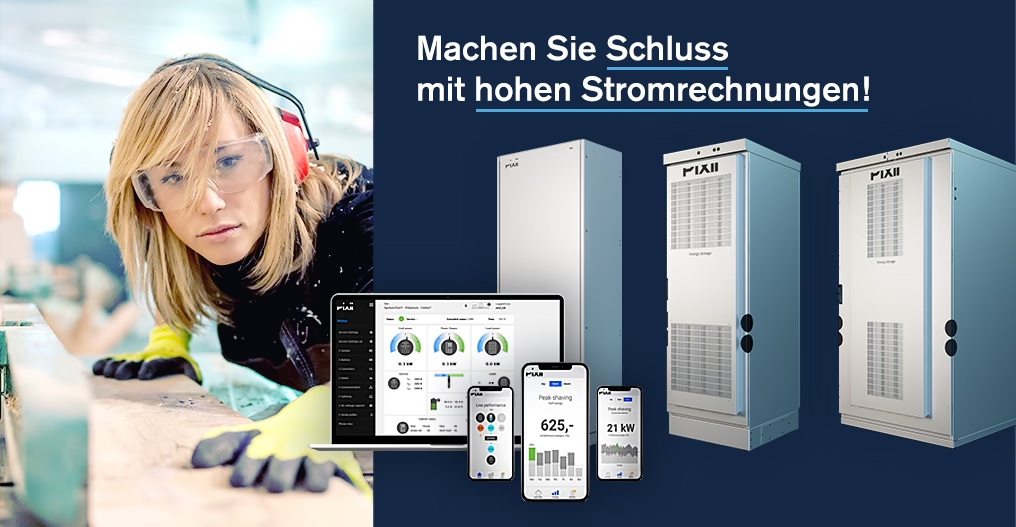
With the energy transition, battery storage is becoming increasingly important to balance the fluctuating feed-in of renewable energy to the electricity grid. But how can a battery storage system pay for itself on an industrial scale? Why is it worth thinking about now?
As solar power production increases, sunny summer days see large surpluses that cannot be used immediately at the point of generation and are fed into the electricity grid. When electricity demand is low, for example on weekends and public holidays, and solar power production is high, the value of solar power decreases. At electricity exchanges, this leads to very low, and increasingly negative electricity prices. In addition, the existing electricity grids no longer have the capacity to transport the surpluses. Grid expansion is progressing slowly and takes several years or decades.
Lower solar power revenues and rising grid costs
The transformation of the energy system towards decentralized and renewable power production is reaching its limits in many places. The political response is shutdowns or reductions in solar power production. In addition, prices for returning power to the grid are tied to the energy market. This means that returns from large industrial photovoltaic systems receive low prices at best and nothing at worst. To integrate renewables, electricity grids are being expanded (albeit slowly) and grid costs continue to rise, which can be seen on the Elcom website.
Power storage with multiple benefits
Both trends – that the purchase of electricity is becoming more expensive due to rising grid fees, and returns to the grid are becoming increasingly unattractive – are driving a strategic shift necessary for the success of the energy transition: produce locally and consume locally. Electricity generation costs for solar power in industrial environments have already achieved parity for years. It is cheaper to generate and consume your own solar power than to purchase electricity from the grid. A battery storage system increases self-consumption, reduces electricity purchase costs and reduces risks from rising grid tariffs. Additionally, power storage systems are used in winter months to stabilize the electricity grid and generate revenues on the energy market.
Payback periods of four to six years
In today’s price environment, battery storage systems pay for themselves within four years. The lifespan is 10-15 years. Medium and long-term developments on the European energy market further increase the value of battery storage systems. Interesting financing options are available.